How to Create a Functional & Inviting Teaching Space (No Matter Where You Teach!)
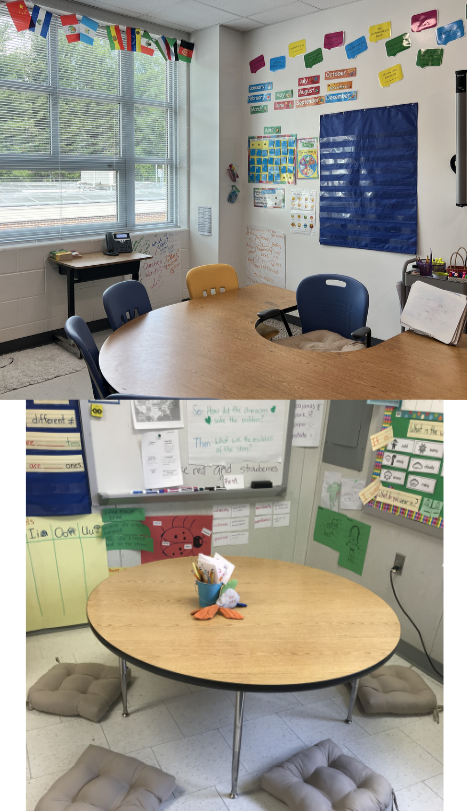
One of the qualities that makes ELD teachers amazing is our flexibility. Every school is different, and so are the spaces we're given.
Some of us have our own classrooms, while others teach from a small office, share a corner of another classroom, or travel from room to room with a teaching cart.
Although we may not always have our dream teaching space, we can create an one that is organized, welcoming, and functional for both ourselves and our multilingual learners.
Below are ideas for three common ELD teaching setups, along with my favorite must-have supplies and simple set-up ideas.
All links for you in the same post, so you don’t have to spend time searching online!
1. If You Have Your Own Classroom Space
Having your own classroom gives you the most flexibility, but it can also feel overwhelming to decorate. My biggest recommendation is to keep your room calm, organized, and language-rich without covering every wall. Make sure you pick a space for your anchor charts and pocket charts since these are essential supports for MLs.
Must-Have Spaces In A Classroom
Teacher desk - This is where you keep your personal materials, planner, laptop, etc. Things that students do not have access to. This is your special space. Organize your space with this desk organizer.
Small group teaching table - This is where you teach your ELD small groups. My favorite type of small group table is the horseshoe table because it allows me to reach all students more easily and see their work more closely than a rectangular or round table.
Student supplies space - I like to keep pencils, erasers, glue sticks, scissors, and highlighters in a supply caddy.I also store my dry erase markers and erasers, anchor chart markers, and my color/number sticks (used to call on students) in this supply cart organizer. Having everything in one place makes it easier to establish routines for getting and putting away materials, while also keeping the space organized.
Word wall - For my word wall, space I hang a pocket chart so I can easily swap out vocabulary words and sentences for different grade levels, lessons, and units. It also makes the word wall interactive, allowing students to remove, manipulate, and use the words as they learn. I usually have one large pocket chart on the wall and a smaller one hanging from my easel. Some years I've had plenty of wall space but no whiteboard, so I've used adhesive whiteboard sheets on the wall. They work as a regular whiteboard, but I also use them to introduce and display new vocabulary when needed.
Anchor chart display - When you are setting up your classroom, think about where you’ll display your anchor charts and how you’ll organize them. I use the sticky anchor chart paper because I can stick one underneath another, while still access them easily throughout a unit if we need to refer back to it. So, planning where to put all your anchor charts helps students know where to look when they need to refer back to an anchor chart or vocabulary word and keeps wall space organized. Check this anchor chart organizer.
Library/Workbook/Notebook Storage - Use shelves to and bins to store your books, workbooks, notebooks, manipulatives, games, and other materials.
Calm Corner and Partner Work/Game Corner (If Space) - If you still have space, consider having a calming corner where students can take a break when needed. Click here to check out my favorite decorations and emotional learning materials for ELD teachers.
Must-Have Materials for ELD lessons:
Dry erase pocket sleeves - These are perfect for teaching vocabulary, spelling, math, or any skill that students need to practice over multiple lessons. Students can simply erase and reuse the same worksheet inside the sleeve, saving you from making extra copies. I use them most often for vocabulary games and math practice.
Magnetic whiteboard organizers - This is a must-have for keeping your dry erase markers, eraser, and other whiteboard supplies organized and within easy reach of your whiteboard or easel.
Highlighter Tape - One of my all-time favorite teaching supplies! It's perfect for highlighting vocabulary in context, teaching reading skills, and emphasizing important academic content. Students love using it because it makes reading activities more interactive and engaging
Sentence strips - A classroom essential for anyone who works with multilingual learners. I recommend buying the cardstock ones in a variety of colors since they're more durable.
Cover Up/Correction Tape - Have you ever been working on a beautiful anchor chart but made a mistake? This tape helps you not have to start all over again. It is a must-have supply.
2. If You Teach from a Small Office or Shared Corner
Many ELD teachers don't have an entire classroom, and that's okay! Even a tiny space can become inviting.
Focus on making the area feel organized and functional so you can use as much space as you can.
Space-Saving Ideas
Anchor Chart Hangeror Clothing Rack - Keep all of your anchor charts in one organized place for easy access during lessons while saving wall space.
Invisible Whiteboard for Walls- No whiteboard? No problem, stick this to a wall and now you have a whiteboard.
Rolling Whiteboard - A rolling whiteboard takes up less space than a traditional easel and can easily be moved wherever you're teaching. It's a great option if you work in multiple locations throughout the day.
3. If You are a Traveling Teacher
Going from classroom to classroom requires organization more than decoration. The goal is to carry everything you need while keeping the cart lightweight and easy to move.
Cart Options that I have Used
Utility Cart for Traveling Teachers
Materials to Take In the Cart
Must-Haves for Any Situation
Lesson Material StorageCheck out here how I use these bins to store my materials from year to year saving planning time.
Clothing MagnetsYou can wear academic vocab words all day and ask students their definitions. These are great for for vocabulary support and review.
Magnetic hooks- These hold your anchor chars, visuals, and pocket charts.
Sticky Anchor Chart Paper- This is my favorite type of easel paper to use because it helps me save space and not visually overwhelm students with lots of anchor charts around the room. I can stick one under the other by unit or content area and pull the ones we need for specific lessons easily. It helps me organize my wall space. If you have more funds to spend or would like to storage for your anchor charts, you can use this anchor chart organizer too.
Supply Organizer Caddy - The only supplies I have in my supply organizer are pencils, highlighters, scissors, glue sticks, and erasers. I can take it anywhere with me if I have to go to a different classroom to teach a small group and I don’t need to think what I need to take, just grab the caddy. I only have one handheld sharper that I’m the only one allowed to use because some students like to use the electric sharpener to take a break or distract others during a lesson.
Student notebooks/workbooks - We have been using workbooks from a curriculum since three years ago, but I always like my students, now, my newcomers only to have notebooks. Here I teach them how to write in an organize way, they get extra write practice, we can do word work, sorts, and other types of fun activities that are extra from the curriculum to really teach them what they need to develop their English language skills and access grade level content. So, for me notebooks are a must!
Other supplies to have: sticky notes, pens, clipboard with schedule, whistle (recess duty), chime for classroom management
Rolling Easel With Storage- Any type of cart that has storage, whiteboard space and hooks to hang anchor charts is a must for any ELD/ML teacher.
Highlighter Tape - One of my favorite supplies ever! It is perfect for teaching vocabulary in context, reading skills, academic content, and students love it because it is engaging. Make any reading activity more fun with this tape.
My Favorite Organization Tips
No matter where you teach, these tips have made the biggest difference for me:
Label everything.
Use clear bins whenever possible.
Keep student materials separate from teacher supplies.
Create one "grab-and-go" basket for your most-used materials. This is where the paper storage bins come into play.
Keep extra copies organized by grade level in your desk organizer.
Store seasonal materials or materials by unit separately in these plastic bins.
Leave a little empty space so new resources have a home and the wall space doesn’t feel overwhelming.
Remember...
Your teaching space doesn't have to be or look perfect. Your students won't remember whether your bulletin board matched your bins, they'll remember how welcomed they felt when they walked into your space.
Whether you teach in a classroom, a shared corner, a small office, or from a cart, creating an organized, cozy, and inviting environment will help both you and your multilingual learners feel ready for a successful school year.
For more resources and strategies to use with multilingual learners:
Visit the website www.allabouteld.com
Join a course: https://www.allabouteld.com/courses
Shop for ready-to-use resources
Listen to the "5 Minute ELD" Podcast
Watch the All About ELD Youtube Channel